
Off-grid solar for baches, remote blocks and farms
Stand-alone power for properties the grid doesn't reach, or where getting it to the boundary costs more than it's worth. Your own panels and batteries, plus a backup generator for the cloudy weeks, no lines and no monthly retailer bill. Designed to AS/NZS 4509 and installed by a registered electrician who arranges the independent inspection sign-off as part of the job.
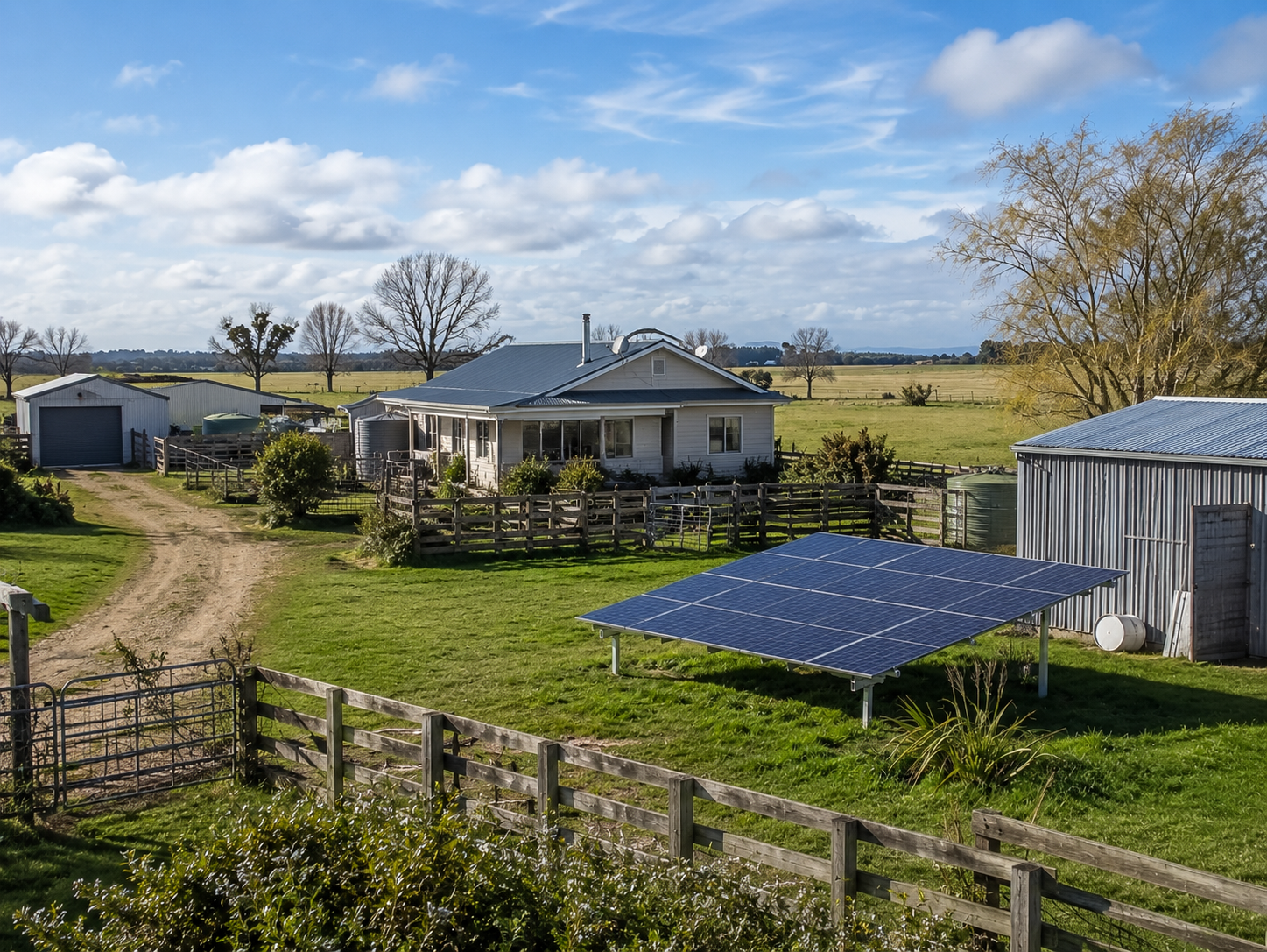 Image: off-grid solar array on a remote rural property
What is off-grid solar?
Off-grid solar is a stand-alone power system that runs a property entirely on its own solar panels and batteries, with no connection to the national grid. A backup generator covers the odd stretch of bad weather. It is the usual answer for baches, farms and rural blocks where a grid connection is too far away, or too expensive, to bring in. Here is how it sits against the two grid-connected setups most people know.
Grid-tied
Panels feed the house and any extra goes back to the grid. No batteries, so when the power cuts out, so does the solar. Cheapest to install.
Hybrid
Grid-tied with a battery added. Stores your own power and rides through a cut, but stays connected to the network as a backstop.
Off-grid
Solar, batteries and a backup generator run the whole property on their own. No lines to the house, and no monthly bill from a power company.
Weighing solar in general, not just off-grid? Our Solar Power guide walks through grid-tied, hybrid and off-grid side by side.
Sizing an off-grid system is not guesswork
We work backwards from your usage, not forwards from a price. The conversation usually goes like this.
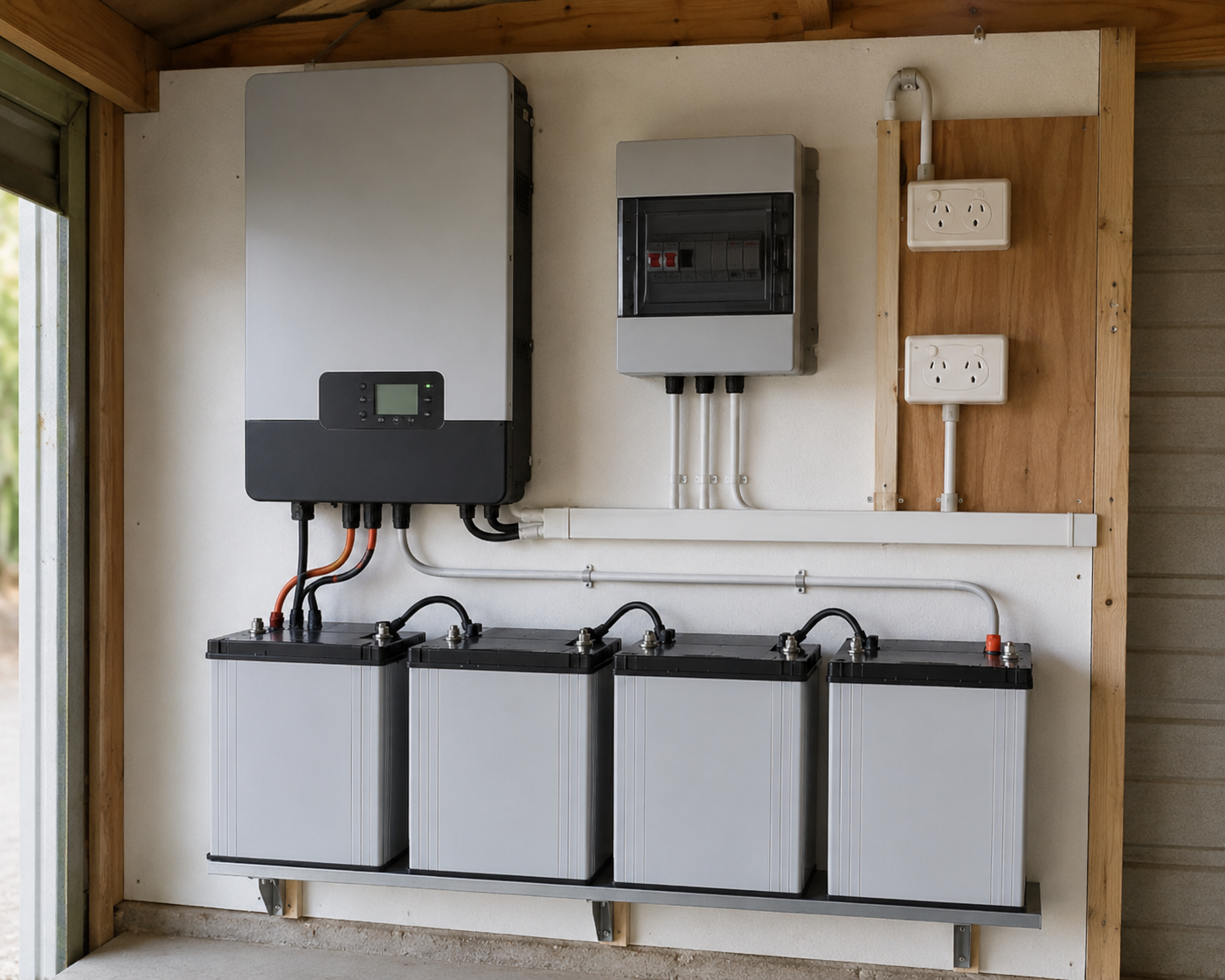 Photo: off-grid battery bank and inverter install
Priority loads first
Lighting, fridge, freezer, hot water, internet, water pump, maybe a heat pump. What do you absolutely need on every day? What is a nice-to-have? What can you live without on a bad weather day?
How you actually live
Washing clothes daily or twice a week? Cooking on gas or electric? Two people or six? Living there full-time or just weekends? It all changes the daily power use, often two or three times over.
Worst-month design
We size for the worst sun-month of the year, plus battery storage and the generator as backup. Get winter right and summer looks after itself.
Where you can give a little
A few small habits bring the cost down. Running the washing machine, dishwasher and oven all at once is fine on the grid; off-grid you just space them out. Little changes like that often save a fair bit without you really noticing.
Room to add later
We build it so you can grow it. Adding panels or more battery down the track, or swapping out the generator, is all easy enough when the system's set up for it from the start.
 Q Card
logo
Spread the cost of your upgrade
Ask us about Q Card. Get the job done now and pay it off over time.
- Switchboards
- Heat pumps
- Solar
- Ventilation
- Larger projects
Banks also offer low-interest green loans for eligible energy efficiency upgrades, worth asking yours. Q Card is provided by a third party, lending criteria, fees and terms apply.
Why people choose us for off-grid installs
A registered electrician and inspector, based in Ngatea, who knows this work and stands behind the system once it is live.
Built to AS/NZS 4509 as standard
Off-grid runs to its own standard, AS/NZS 4509, and not every installer designs to it. We build to it on every job, not as an extra on the quote.
Inspector and electrician under one EWRB
Charly installs the system and coordinates the independent inspection sign-off himself. One point of contact from the first site visit to the day it goes live.
Off-grid is regular work for us
Off-grid baches, forestry blocks and remote farmland are normal jobs here, not a novelty. We know the brands that hold up in NZ conditions and the support they need after.
No call-out fee. No obligation.
Properties where off-grid is the better answer
Off-grid wins when the grid is genuinely far away, or when the cost of getting it to your boundary changes the maths. Here is where we see it pay off.
Remote properties where the grid extension quote is a deal-breaker
Lines-company connection quotes vary with distance, terrain and existing infrastructure. A new transformer plus cable run can add up faster than a complete off-grid system. Get a grid-extension quote in writing first, then compare it line-for-line against an off-grid quote from us. Sometimes off-grid wins outright. Sometimes the grid does. We will walk the maths with you.
Off-grid baches inland of the Thames Coast
Properties up the gullies past Tapu, or out on the back blocks where the lines never reached. Some were never connected; others lost the connection decades ago. A properly sized off-grid system runs the lighting, fridge, hot water and a heat pump, with no standing-charge bill turning up while no one is there. See the broader work we do across the Thames Coast area.
Forestry blocks and remote rural land in North Waikato
Working forestry blocks and large rural holdings around Maramarua often sit on long internal access tracks well off the closest connection point. Running new lines along a forestry track to feed a small cabin or weighbridge office is rarely economic. Off-grid usually pays for itself faster out here than just about anywhere. We cover the broader North Waikato area regularly.
New rural subdivisions where the connection fee is high
On some new lifestyle-block lots the developer's quote to bring power to the boundary makes off-grid look reasonable on day one. Worth getting that connection figure from your developer before you assume grid is the only option, it's often higher than people expect.
Holiday homes where reliability matters more than price
Some owners go off-grid by choice rather than necessity. Full control over your power, no storm cut interrupting the family weekend. Ties in with the bach and coastal work we do across the Thames Coast area.
Common questions about off-grid solar
Straight answers to what people ask before they book a site visit. Anything not here, give us a call.
How do I decide between off-grid and a grid connection?
Will an off-grid system run my whole house?
How often does the backup generator run?
What if the inverter fails?
Can I add to my off-grid system later?
Do I need a building consent?
Does off-grid solar actually work in cloudy NZ winters?
Who signs off the installation?
Ready to talk through an off-grid project?
There's no quoting an off-grid system over the phone, every place is different. Charly comes out, has a look at the site and how you use your power, then sorts you a proper quote from there. The visit's free, and no pressure to go ahead with it.
Or read the Solar Power guide to compare off-grid against grid-tied and hybrid first.