Electrical Inspector in Ngatea
After an electrical inspector? Charly The Sparky is a registered Electrical Inspector, not just a sparky. From high-risk jobs and solar installs to generator changeovers, caravan EWOFs and older home wiring, every inspection is handled locally and comes with a proper written report at the end.
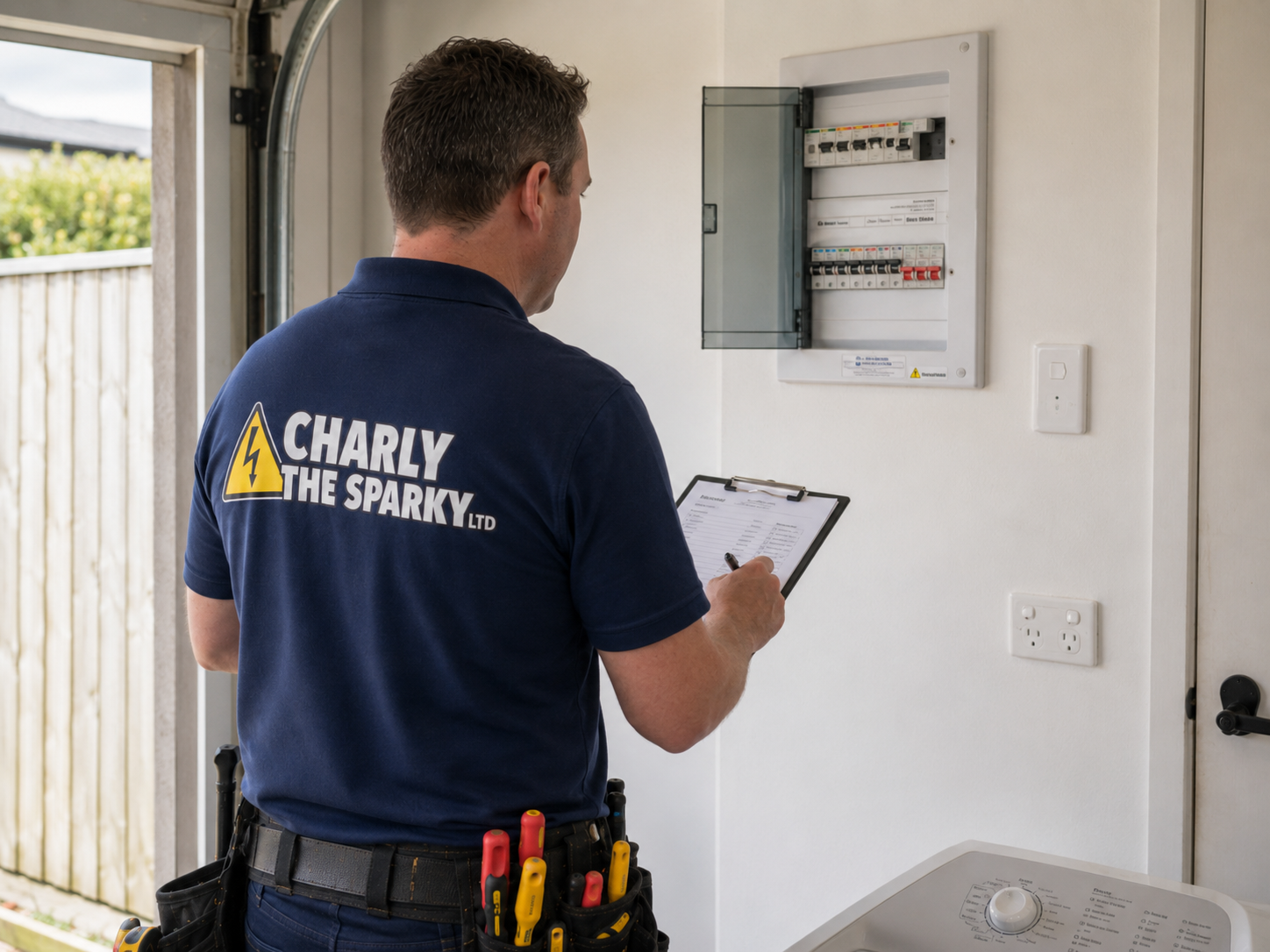 Photo: Charly The Sparky, EWRB Electrical Inspector I104520
What is an electrical inspector?
An electrical inspector is a registered electrician who has gone a step further and gained a separate inspector registration with the Electrical Workers Registration Board. On top of doing electrical work, an inspector can independently check and sign off other electricians' high-risk work, and certify existing installations that nobody else has.
Independently inspects other people's work
Checks the High-Risk Prescribed Electrical Work done by other electricians and issues the Record of Inspection. The person who does the work cannot sign off their own high-risk job, so an independent inspector is required.
Issues Certificates of Verification
Verifies and certifies existing installations, including ones reconnected after more than 6 months off supply, and caravan-park or marina supplies, where no Certificate of Compliance exists.
Holds a separate inspector registration
Inspector is its own EWRB registration that takes extra time on the tools as a registered electrician before sitting the inspector exam.
When you need a registered inspector
- High-risk work like new mains, main-switch board work or grid-tied solar that another electrician carried out
- An installation being reconnected after more than 6 months off supply
- A caravan-park, camping-ground or marina electrical supply
- Any time you want an independent, documented check on someone else's wiring
Electrical inspection services, eight types under one roof
Each inspection type below is its own service: its own scope, its own regulatory grounding, its own typical scenarios. If you know which one you need, book directly. If you're not sure, call and we'll work it out together.
01 · Caravan EWOF Caravan, motorhome and campervan EWOFs
The Electrical Warrant of Fitness covers caravans, motor caravans, campervans, transportable buildings and other relocatable structures with electrical installations. Pre-sale documentation, hire-fleet annual compliance and post-modification verification are the three big drivers. Most caravans take 1 to 2 hours on site; motorhomes with more circuits and added solar can run longer. Verification runs against AS/NZS 3001.2:2022, AS/NZS 3000 for fixed wiring and AS/NZS 3019 for in-service methodology.
Typical scenarios
- Selling a caravan and needing pre-sale documentation for the buyer
- A hire fleet doing annual compliance before the busy season
- An owner who has installed solar panels, an inverter or a new battery and needs verification before re-using the unit
02 · Certificate of Verification Certificate of Verification for existing installations
A Certificate of Verification (CoV) certifies an existing electrical installation that has no Certificate of Compliance on record. The Electricity (Safety) Regulations 2010 call for one in specific situations: an installation reconnected after more than 6 months off supply, a caravan-park, camping-ground or marina supply, or older wiring that needs certifying for a sale, an insurer or a lines company.
Charly inspects and tests the installation against the current standards, then issues the CoV once it passes, along with a written report and a clear list of anything that needs sorting first.
Typical scenarios
- An installation being reconnected after more than 6 months off supply
- A caravan-park, camping-ground or marina electrical supply
- Older wiring with no paperwork, needed for a sale or insurer
- An installation a lines company won't reconnect without verification
03 · Switchboard Inspection Pre-sale, insurance and renovation switchboard reports
A switchboard inspection is a physical and electrical assessment of an existing switchboard: its condition, its compliance against current standards, and any safety issues. The four common triggers are property sale due-diligence, insurance renewal, fault investigation and upgrade scoping for renovation. What we check: rewireable-fuse presence, RCD coverage, neutral sizing, thermal evidence of past arcing or overheating, main-switch isolation, labelling and overall condition. Findings go into a written report you can hand straight to your insurer, real-estate agent or renovation builder.
Typical scenarios
- Pre-purchase check on an older Paeroa, Thames or Te Aroha villa
- Insurer-requested inspection after a claim
- Landlord pre-tenancy compliance
- Renovation scoping, is the existing board enough, or does it need upgrading first?
04 · Main Earthing Check Main earth and bonding integrity
The main earthing system is what keeps exposed metalwork safe and lets a fault clear properly. It degrades over time, often invisibly. Two specific issues drive demand in this region: peat-soil shrinkage across the Ngatea region, which pulls earth electrodes out of contact with moist soil over the years; and salt-air corrosion on coastal properties at Waihi, the Thames Coast and Waihi Beach, which eats unprotected electrodes from the outside. You don't know it has failed until a fault occurs and the earth doesn't trip. We test earth-electrode resistance, main-earth conductor continuity, equipotential bonding to incoming services, and the earth-bar at the switchboard. Written report with test readings.
Typical scenarios
- Older farmhouse around Ngatea with the original electrode from build date
- Coastal property at Waihi Beach with a corroded electrode
- Post-flood earth integrity check
- Pre-renovation, planning to add load and need to know the earth will hold
05 · Internal Mains Verification Internal mains checks before adding new load
Internal mains is the cable from your consumer service point to the main switchboard. It's often the weakest link in older properties, undersized for modern loads like EV chargers, heat pumps and induction cooktops, or degraded from age. Adding load without verifying the internal mains first is how houses end up with hot connections and tripped breakers under normal use. We verify cable type and size, condition, voltage drop under expected loads and the suitability of the existing run for the planned new load. Written report you can hand to your EV-charger installer, solar inverter contractor, heat-pump fitter or use for pre-sale due diligence.
Typical scenarios
- Before installing an EV charger or solar inverter on an older property
- Adding a heat pump or induction cooktop in a 1970s home
- Pre-sale due diligence on a property with a long internal-mains run
- New-build sign-off where the supply spec is being questioned
06 · Solar Verification Independent solar PV verification
Solar PV installations need independent verification on both the DC side (array, strings, isolators) and the AC grid-connection side (inverter, RCD, anti-islanding, labelling). Your lines company and insurer may also require it before they sign off on the system. What we verify: panel mounting and string configuration, DC isolators, inverter installation, AC isolation and RCD coverage, anti-islanding protection, labelling and the completeness of the documentation pack handed over to the homeowner. Verification runs against AS/NZS 5033, AS/NZS 4777.1, AS/NZS 5139 where a battery is fitted, and AS/NZS 3000.
This is the verification side of our solar work. Where Charly carries out the install himself, the independent sign-off for any high-risk grid-connection work is issued by another registered inspector. Where another sparky has installed it, Charly is the independent inspector who verifies and signs it off.
Typical scenarios
- Newly commissioned grid-tied solar on a Thames or Ngatea property
- Battery retrofit on an existing solar install
- Dairy shed solar install in the Ngatea area
- Solar fitted by an out-of-area installer who can't return for the sign-off
07 · Generator Inspection Generator changeover and standby system inspections
Incorrectly wired generators are dangerous in two distinct ways. They can backfeed the grid, feeding power back up the line that lines workers believe is dead, which is a fatal electrocution hazard. And they can fail to deliver power when needed, because the neutral isn't arranged correctly or the changeover switch isn't doing what it claims. WorkSafe NZ treats incorrect generator connection as a serious safety issue. What we verify: changeover-switch operation, anti-islanding behaviour, neutral arrangement, generator inlet plug condition, dedicated standby circuit wiring, and labelling.
Typical scenarios
- Thames Coast bach storm resilience install (manual or automatic changeover)
- Vat-refrigeration backup on a dairy farm around Ngatea
- Off-grid hybrid system with a generator backup
- Commercial site standby generator for outage tolerance
08 · Independent Inspection for Other Sparkies Peer-to-peer independent inspection for other electricians' work
For other electricians and builders. When you carry out High-Risk Prescribed Electrical Work (HRPEW) – new mains, main-switchboard work, grid-tied solar – and aren't a registered Inspector yourself, the work has to be independently inspected and a Record of Inspection issued under the Electricity (Safety) Regulations 2010. Charly does these regularly across the wider Ngatea area, where the registered-inspector pool is small: independent inspection and testing, a review of your results and documentation, a written sign-off, and a clear list of remediation items if anything needs attention before it passes.
Typical scenarios
- Sub-contracted commercial fit-out where the lead electrician isn't an inspector
- Larger residential project where the client wants independent sign-off
- Sub-contracted dairy shed install
- Contested or disputed work needing a peer-review write-up
 Q Card
logo
Spread the cost of your upgrade
Ask us about Q Card. Get the job done now and pay it off over time.
- Switchboards
- Heat pumps
- Solar
- Ventilation
- Larger projects
Banks also offer low-interest green loans for eligible energy efficiency upgrades, worth asking yours. Q Card is provided by a third party, lending criteria, fees and terms apply.
Why choose Charly for an electrical inspection in Ngatea
Charly The Sparky is a registered Electrical Inspector, not just an electrician – a higher EWRB registration that takes extra years on the tools and a separate exam. It means he can independently inspect and certify other electricians' high-risk work, not just sign off his own. And because he's based right here in Ngatea, you get that independent, properly documented sign-off from a local who knows the area.
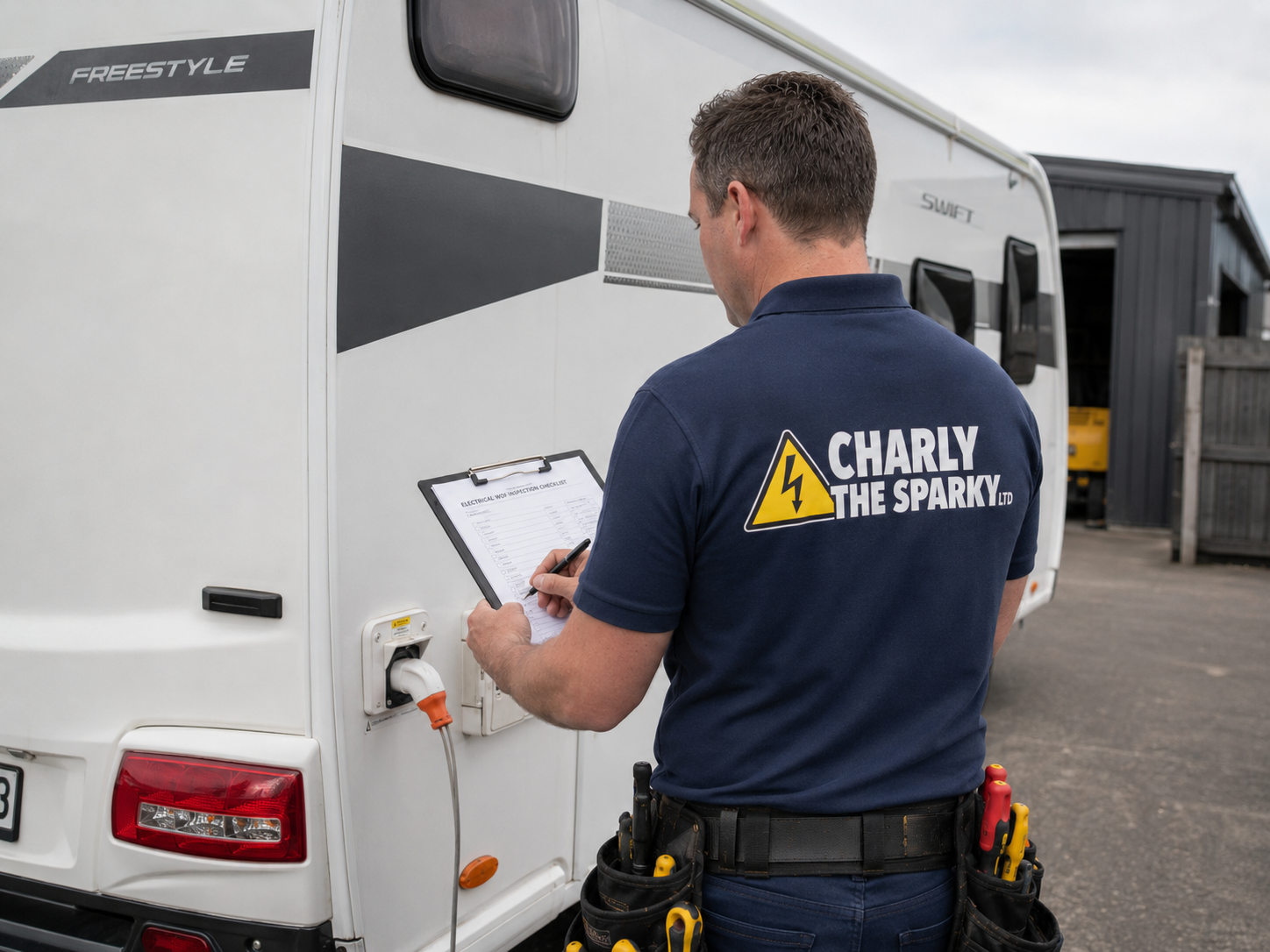 Photo: Charly completing an inspection report on site
One local sparky for the whole job
A lot of jobs that need an inspection need a bit of work done too. Charly can do the electrical work and handle the independent inspection and sign-off, so it's one local from start to finish rather than lining up a separate inspector from out of town.
Swiss precision, 20+ years on the tools
Charly trained as an electrician in Switzerland before moving to New Zealand 20+ years ago. That measured, methodical way of working is exactly what you want in an inspection – nothing skipped, everything checked, and the results written up properly.
A proper written report every time
Every inspection comes with a clear written report you can hand straight to your insurer, installer or the council. Test results, any items that need sorting, and the certificate once the work passes. Charly Frey, EWRB I104520.
Common questions about electrical inspections
Straight answers to what people ask before they book. Anything not here, just call.
What's the difference between an Electrical Inspector and an Electrician?
Do I need a CoC, a Record of Inspection, or a Certificate of Verification?
How long does a caravan EWOF take?
Can you inspect solar that another sparky installed?
Will my insurer accept your written switchboard report?
Can you do EWOFs at our hire-fleet base around Ngatea?
Do you do pre-purchase electrical inspections for property buyers?
Can you sign off my generator install if a different sparky did the install?
What areas do you cover for inspections?
Need an electrical inspection?
Pick the inspection type from the eight above, or call and we'll work out which one you need. No call-out fee for the chat, and every inspection comes from a registered Electrical Inspector with a written report at the end.