Farm Solar for dairy sheds, pumps and irrigation
A dairy shed uses most of its power in daylight – refrigeration, hot water, pumps, irrigation – which is exactly when the panels are working, so most of what you generate gets used on the farm instead of exported cheaply. We design, install and certify farm solar across Ngatea, Kerepehi and the wider Ngatea District. A registered electrician and EWRB-registered inspector handles the install and certification, with the required independent inspection arranged.
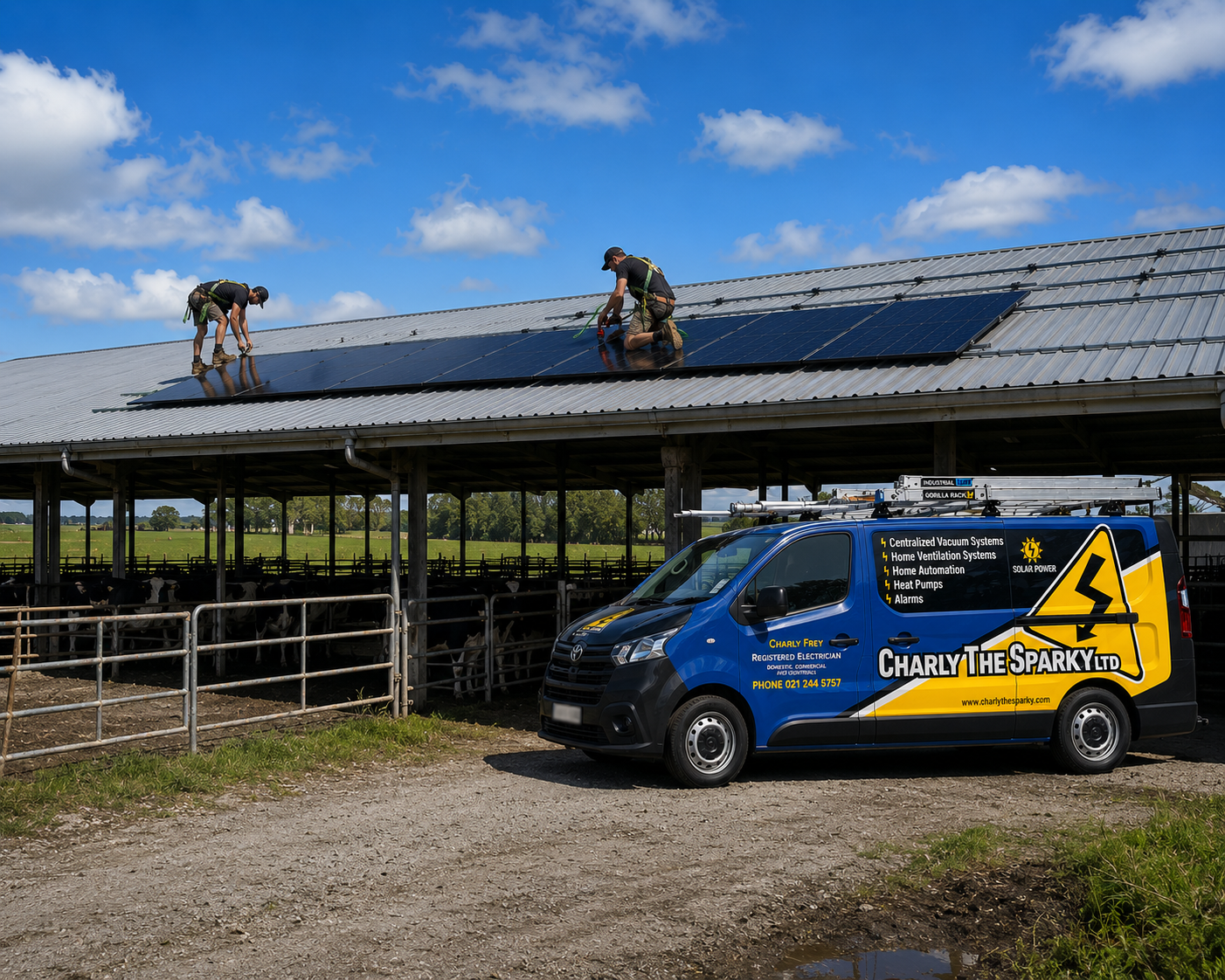 Photo: solar array on a dairy shed near Ngatea
The four farm scenarios solar fits
Solar fits a farm differently depending on what's drawing the power. These are the four setups we see most around Ngatea.
Dairy shed solar
Refrigeration, hot water, vacuum pumps and shed lighting all draw through the day, right when the panels are generating. Most of it gets used at the shed instead of exported.
Irrigation pump solar
Stock-water and K-Line pumps run through daylight in the irrigation season. A right-sized array covers that draw, and bigger operations sometimes warrant a dedicated array by the pump shed.
Lifestyle-block solar
Smaller mixed blocks out towards the Karangahake foothills – farmhouse, workshop and calf shed on one connection. A hybrid system with a battery usually suits, storing the day's solar for evening shed work.
Farm-scale arrays for larger operations
Bigger operations sometimes warrant ground-mount or multi-shed roof arrays. We design and install at that scale too – same standards and certification, just more of it.
Farm solar isn't standard residential solar
Solar on a dairy shed has to meet a different set of standards than one on a suburban roof. The agricultural side of the wiring rules is the part a residential-only installer can miss.
-
AS/NZS 3000 – Wiring Rules
The wiring rules every install has to meet, including Section 7, which covers agricultural and horticultural premises – the part that's specific to farm work.
-
AS/NZS 5033 – PV Array Installations
The standard governing the PV array itself, covering array wiring, DC disconnection, earthing and string protection.
-
AS/NZS 4777.1 / 4777.2 – Grid Connection
4777.1 governs the grid-connection installation. 4777.2 covers the inverter's own certification. Both apply to any grid-connected solar install.
-
AS/NZS 5139 – Battery Storage
Applies where a battery is part of the design. Sets out installation requirements for energy-storage systems.
 Q Card
logo
Spread the cost of your upgrade
Ask us about Q Card. Get the job done now and pay it off over time.
- Switchboards
- Heat pumps
- Solar
- Ventilation
- Larger projects
Banks also offer low-interest green loans for eligible energy efficiency upgrades, worth asking yours. Q Card is provided by a third party, lending criteria, fees and terms apply.
What to expect, in order
Free site visit and consultation
We walk the shed and the property, check the roof, mounting options, switchboard and the three-phase supply, and talk through your milking and irrigation pattern. Bring 12 months of power bills if you have them.
Custom system design
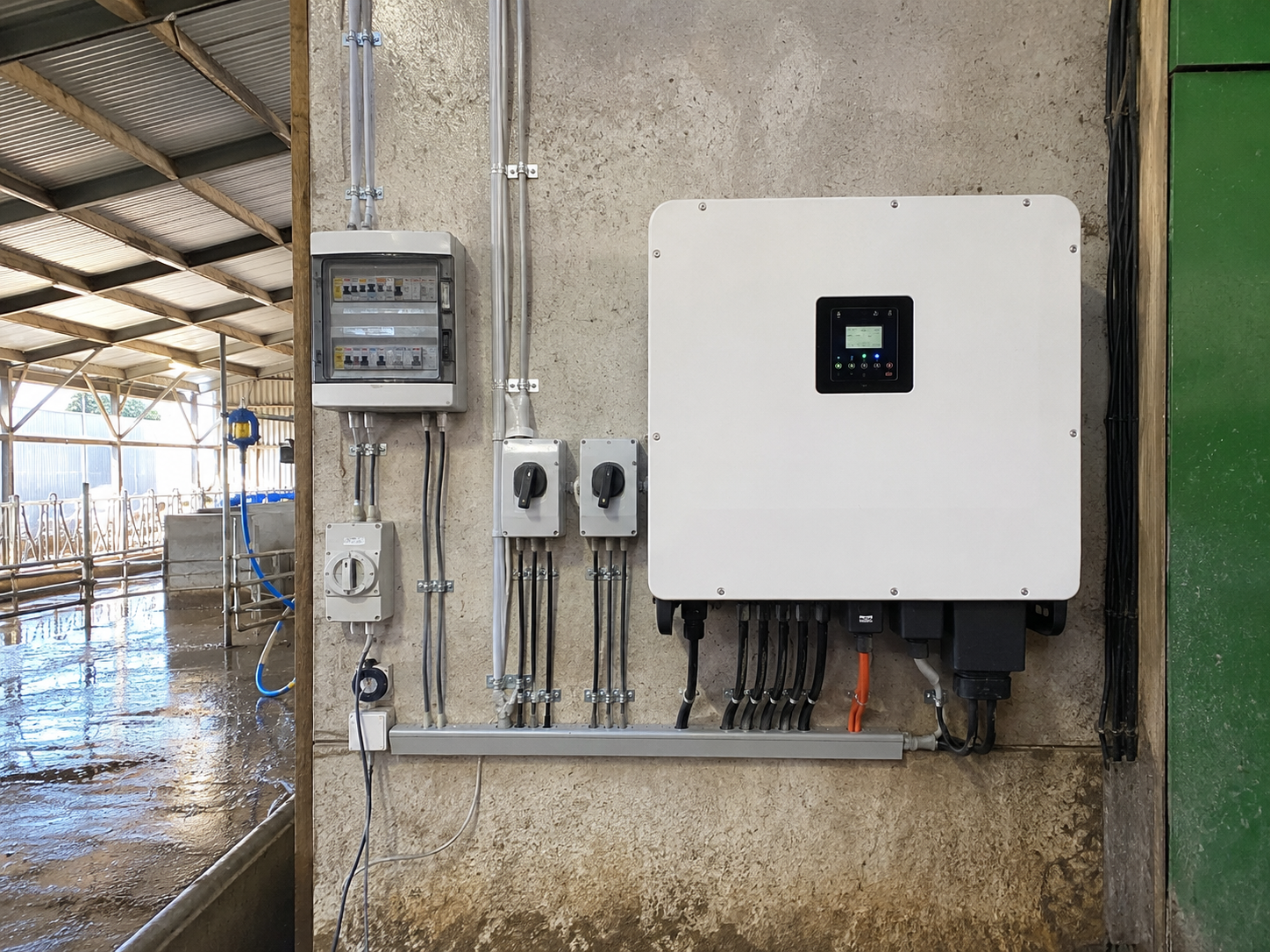
Panel layout, inverter sizing (three-phase where the shed warrants it), DC and AC cable runs, agricultural-grade enclosures, switchboard integration. Battery if a hybrid setup suits how you use power.
Installation around the milking schedule
Most install work happens outside milking hours. The final grid-connection switch typically needs a couple of hours of shed downtime. We schedule that between milkings, not through one.
Testing, certification and inspection
AS/NZS 5033, 4777 and AS/NZS 3000 Section 7 verification for the agricultural-premises side, with certification managed end to end so you have one point of contact.
Ongoing support
Monitoring, occasional service, additional panels or capacity when the farm grows. We're local. We come back.
Common questions about farm solar
Straight answers to what farmers ask before they book a visit. Anything not covered, just give us a call.
Is solar worth it on a dairy shed?
Can solar run the milking shed during the day?
Will solar power my irrigation pumps?
Do I need a separate sparky for the agricultural compliance work?
Can we add solar to an existing dairy shed without disrupting milking?
What about effluent pump solar?
Will my dairy company or processor have an opinion on solar?
Can I claim the farm solar install as a deductible farm expense?
Ready to put solar on the shed?
We'll come to the farm, walk the sheds and the roofs, talk through how you actually use power, and follow up with a transparent quote. No obligation, and we'll be straight with you if solar doesn't stack up on your particular setup.